


10 Must-Try Pastries under DACH Region (Germany, Austria, Switzerland)
The baking traditions of the DACH region—Germany, Austria, and Switzerland—are globally celebrated for their precision, regional variety, and deep cultural resonance. Within German culture, the daily ritual of Kaffee und Kuchen (coffee and cake) represents a sacred social pause designed to slow down the day. Similarly, Austrian culture is defined by its imperial baking legacy, where coffee house traditions are so revered that they are protected as intangible cultural heritage. Swiss culture, meanwhile, beautifully merges alpine rustic survival with elite urban chocolate craftsmanship. This report ranks and analyzes the top ten pastries across this interconnected culinary landscape based on digital platform search trends, platform visibility, and historical significance.
Quantitative Digital Ranking and Market Dynamics
To understand the global footprint of these pastries, search volumes, social media hashtag counts, and bakery databases were analyzed. The following table synthesizes their digital presence, primary sales hubs, and standard price ranges across the DACH region for 2025 and 2026.
Rank | Pastry Name | Country of Origin | Est. Global Monthly Search Volume | Primary Regional Hub | Typical Retail Price (2025/2026) |
1 | Apfelstrudel (Apple Strudel) | Austria | Very High (>500,000) | Vienna (Café Central, Demel) | €4.00 – €10.00 / portion |
2 | Schwarzwälder Kirschtorte | Germany | High (>450,000) | Baden-Württemberg | €3.00 – €5.50 / slice |
3 | Sachertorte | Austria | High (>400,000) | Vienna (Café Sacher, Demel) | €4.00 – €10.00 / slice |
4 | Kaiserschmarrn | Austria | High (>350,000) | Alpine regions & Vienna | €10.50 – €13.90 / skillet |
5 | Franzbrötchen | Germany | Medium-High (>250,000) | Hamburg & Northern Germany | €1.50 – €2.50 / piece |
6 | Bündner Nusstorte | Switzerland | Medium (>180,000) | Graubünden (Samedan) | CHF 19.95 – CHF 25.00 / 500g |
7 | Luxemburgerli | Switzerland | Medium (>150,000) | Zürich (Confiserie Sprüngli) | CHF 29.90 / box of 16 |
8 | Linzer Torte | Austria | Moderate (>120,000) | Linz (Konditorei Jindrak) | €12.30 – €22.50 / whole tart |
9 | Nussecke | Germany | Moderate (>100,000) | Bakeries nationwide | €3.00 – €4.25 / piece |
10 | Carac | Switzerland | Specialty (>80,000) | French Romandie region | CHF 4.80 – CHF 4.90 / piece |
Detailed Analysis of the Ten Pastry Masterpieces
1. Apfelstrudel (Apple Strudel)

Among Austrian pastry names, none evoke as much comfort as the iconic Apfelstrudel. Believed to have originated in the lands of the former Austro-Hungarian Empire, with its oldest recorded recipe dating back to a handwritten document from 1697, the strudel is the pride of Viennese baking tradition. This pastry features a sweet filling of tart baking apples, dark raisins, cinnamon, and butter-toasted breadcrumbs.
The hallmark of an authentic strudel is its incredibly thin, unleavened dough, which must be hand-stretched over a large cloth until transparent enough to read a newspaper through. The digital universe is fascinated by this traditional technique, making it a highly searched term during the colder months when cozy comfort foods spike in popularity online. Typically enjoyed warm with a dusting of powdered sugar and a side of hot vanilla sauce or whipped cream, it is also found on Swiss mountaintops with breathtaking views of the Matterhorn.
In local Viennese neighborhoods, a generous portion of this masterwork costs between €4.00 and €6.00, while historic tourist destinations like Café Central or Demel price it between €6.00 and €10.00. It is widely celebrated as one of the best Austrian pastries in existence.
2. Schwarzwälder Kirschtorte (Black Forest Cake)
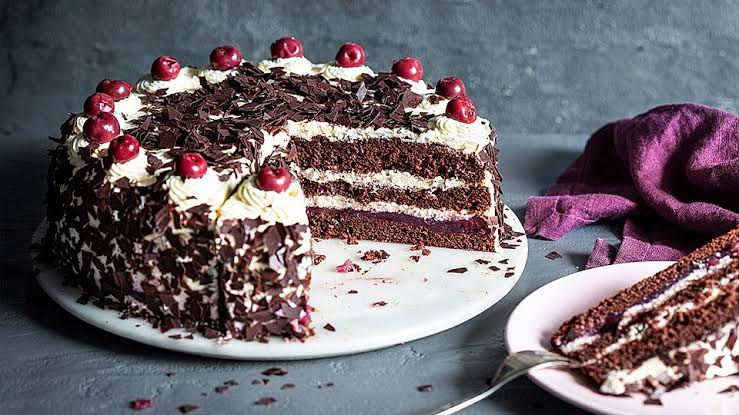
Standing proudly among classic German pastry names, the Schwarzwälder Kirschtorte is a global culinary superstar and a crown jewel of best German pastries. This dessert is deeply rooted in German heritage, celebrating high-quality regional ingredients. The cake consists of multiple layers of chocolate sponge cake soaked in Kirschwasser—a potent cherry schnapps distilled in the Black Forest region—and filled with fresh whipped cream and sour cherries, finished with chocolate shavings.
The striking contrast of deep chocolate, snow-white cream, and bright cherries makes it incredibly popular on image-heavy social media platforms. Sold in virtually every traditional Konditorei throughout Germany, a fresh, artisanal slice ranges from €3.00 to €5.50 in local independent bakeries, showing remarkable value despite rising dairy and cocoa costs in the 2025/2026 market.
3. Sachertorte

The prestigious Sachertorte is an absolute icon of Austrian culinary history dating back to 1832. Created by a clever 16-year-old apprentice chef named Franz Sacher to satisfy the guests of Prince Wenzel von Metternich, the cake is a dense chocolate sponge coated in a smooth, dark chocolate glaze, with a hidden, thin layer of sweet apricot jam in between.
Online platforms are continuously fascinated by the historic "Sacher cake war"—the decades-long legal dispute between Café Sacher and court confectioner Demel over the rights to the "original" recipe. The cake is traditionally served with a mandatory side of unsweetened whipped cream (Schlagobers) to balance the intense chocolate richness.
At Vienna's Demel, a whole 1.25 kg cake in a classic wooden box retails for €51.00. For those visiting Demel, a single slice can be enjoyed alongside another royal favorite: Princess Sisi’s beloved candied violet petals, which cost €12.50 for a small 38g jar.
4. Kaiserschmarrn

A comforting sweet that frequently crosses the boundary between a dessert and a main course is Kaiserschmarrn. Translating to the "Emperor's Mess," this beloved dish consists of a thick, sweet pancake batter enriched with separately whipped egg whites to achieve a fluffy interior.
The chef tears the pancake into bite-sized, irregular pieces using two forks while it caramelizes in a hot, buttered pan, often tossing in raisins before dusting the entire creation in powdered sugar. This dynamic pan-tearing process makes it a viral sensation on video platforms. Piping hot and rustic, it is traditionally paired with Zwetschkenröster (a spiced plum compote).
Widely served in alpine ski lodges to warm up chilly travelers and in traditional Viennese restaurants like Figlmüller, a generous skillet is priced around €13.90.
5. Franzbrötchen

Hailing from northern Germany, the Franzbrötchen is a cinnamon-infused pastry that has captured the hearts of pastry lovers. Prepared with a buttery, laminated yeast dough known as plunderteig, the dough is rolled with a sweet cinnamon-sugar mixture, sliced, and pressed in the center with a wooden spoon handle to create its signature flared ears.
The search engine popularity of the Franzbrötchen has grown significantly as travelers share their local discoveries from Hamburg bakeries. A standard Franzbrötchen in Hamburg is highly accessible, costing between €1.50 and €2.50.
However, boutique establishments like Hamburg's Cinnaversum have popularized modern gourmet varieties stuffed with pistachio, strawberry, or speculoos cream for about €6.79 per piece, making them highly sought-after online sensations.
6. Bündner Nusstorte (Engadine Nut Tart)

Deeply woven into Swiss heritage is the Bündner Nusstorte (or Engadiner Nusstorte), a rich, shortcrust pastry filled with caramelized sugar, cream, and chopped walnuts. Historically, the nuts had to be imported because walnut trees could not grow in the harsh local alpine climate of the Graubünden canton.
The pastry's origin is tied to the "randulins" (the swallows)—emigrant Swiss pastry chefs who moved to Italy for work and eventually returned home, bringing their pastry secrets with them. On the internet, it is celebrated as a highly caloric energy source beloved by alpine mountain bikers and hikers looking for a quick, delicious battery recharge.
While many bakeries make their own variations, the most revered family recipe belongs to Laager's Bakery in Samedan, which has guarded its secret since 1850. This tart is commonly shipped globally as a festive gift, with a classic 500g tart costing approximately CHF 19.95. It is widely recognized as one of the best Swiss pastries.
7. Luxemburgerli

When discussing Swiss pastry names, none carry quite the same airy prestige as the Luxemburgerli. Created in 1957 by a young confectioner from Luxembourg working at Confiserie Sprüngli in Zürich, these miniature macaron creations are significantly smaller, fluffier, and lighter than traditional French macarons.
Available in a gorgeous array of flavors like Champagne Rosé, Bourbon-Vanilla, and Caramel Fleur de Sel, Luxemburgerli have achieved a cult status online for their luxurious aesthetics and delicate mouthfeel. They are sold exclusively at Sprüngli's elegant shops, such as the iconic boutique on Zürich's Paradeplatz. A beautifully prepared box of 16 without alcohol is priced at CHF 29.90, while a larger box of 36 costs CHF 57.90.
8. Linzer Torte

Steeped in history, the Linzer Torte is widely recognized as the oldest cake recipe in the world, dating back to 1653. The tarts feature a richly spiced shortcrust pastry infused with ground hazelnuts or almonds, cloves, and cinnamon, spread with a vibrant redcurrant jam and topped with a beautiful, hand-woven lattice pattern.
This pastry is highly popular online during the winter season, serving as a Christmas staple because it is easy to package, preserve, and ship. The ultimate destination for this classic is the family-run Konditorei Jindrak in Linz, where travelers can even participate in a show bakery to bake their own. Jindrak's original Linzer Torte is priced at €12.30 for a small 15 cm diameter size, and €21.60 for a 20.5 cm size, representing an accessible taste of living history.
9. Nussecke (Nut Corner)

The Nussecke (German Nut Corner) is a beloved bakery staple that is found year-round across Germany but sees a massive search spike during the Christmas market season. It is composed of a soft, buttery shortbread base containing a hint of baking powder for a lighter texture, a layer of tangy apricot jam, and a thick, sweet caramelized hazelnut topping, with the finished triangular corners dipped in rich dark chocolate.
Epicureans online appreciate the perfect balance of gooey caramel, nutty crunch, and smooth chocolate. Sold in virtually every neighborhood bakery in Germany, a single Nussecke is a large, satisfying treat that typically costs around €3.00, though specialized German-style bakeries abroad sell them for around $3.95.
10. Carac

Representing the French-speaking Romandie region of Switzerland, the Carac is a small, vibrant pastry that stands out instantly on social media feeds. It features a delicate shortbread pie crust, a rich dark chocolate ganache filling blended with cream, and a bright green sugar glaze topped with a single chocolate dot.
The striking green icing and intense chocolate flavor make it a viral favorite among food bloggers. This eye-catching pastry is sold primarily in French-speaking cantons and elite confectioneries like Sprüngli, where it costs CHF 4.90 for a single-serving tart. It is celebrated as one of the most unique and eye-catching creations among best Swiss pastries.
Analyzing Platform Dynamics: Why These Pastries Trend Globally
The digital footprint of DACH pastries reveals a fascinating intersection of food heritage and modern visual culture. Platforms like Instagram and TikTok have radically changed how traditional pastries are discovered and shared. The success of pastries like the Carac and Franzbrötchen is heavily driven by their geometric symmetry and bold colors, which stand out in busy social feeds.
On the other hand, rustic favorites like Apfelstrudel and Kaiserschmarrn experience predictable seasonal search spikes linked to winter sports, alpine tourism, and cozy comfort food culture. The "aspiration factor" is highly influential here: a beautifully plated strudel or a skillet of fluffy Kaiserschmarrn instantly transports the viewer to a snow-covered chalet, translating sensory warmth into high digital engagement.
Conclusion
The pastry culture of the DACH region represents a masterclass in culinary preservation and modern culinary branding. Germany excels in comforting, year-round bakery staples like the Nussecke and the regional Franzbrötchen. Austria leans heavily into its elegant, imperial coffee house heritage to position the Apfelstrudel and Sachertorte as premium global delicacies. Meanwhile, Switzerland commands the luxury market with the precision of the Luxemburgerli and the vibrant Carac, balanced by the rustic alpine history of the Bündner Nusstorte. For any traveler or food lover, exploring these sweet creations is not just an indulgence—it is a way to experience the history and living traditions of Germany, Austria, and Switzerland.


Comments